Upcoming workshop · 3-Day ADMET, Machine Learning & Molecular Docking Workshop
From Molecular Structure to a Docked, ADMET-Filtered Candidate List
A 3-day hands-on workshop by Discovery Boulevard, with a standalone desktop Workbench you keep
About the workshop
Most drug candidates that fail in development do not fail because they miss their target. Fialuridine was a potent antiviral until delayed mitochondrial toxicity killed patients in a Phase II trial. Torcetrapib raised HDL cholesterol exactly as designed and still failed Phase III on cardiovascular toxicity. Potency got both molecules made; ADMET decided what happened next.
This workshop teaches ADMET as a decision workflow rather than a list of numbers copied off a prediction website. Every descriptor is tied to a physical event happening to a real molecule: a solubility limit in the gut, a polar surface area a membrane will not let through, a lipophilicity value that invites CYP metabolism and hERG binding.
Day 1 builds the foundation. Day 2 turns it into an automated profiling pipeline for a compound library. Day 3 is a complete small discovery campaign on EGFR kinase: a target-specific machine-learning model, FAISS descriptor-space similarity search, ADMET filtering and AutoDock Vina validation, combined into one ranking. You run all of it yourself, with no prior programming experience required.
- Standalone desktop Workbench (Windows & Linux)
- Live online, 8:30 – 10:00 PM IST
- Recordings of all three sessions
- Ready-to-run Google Colab notebooks
- Frozen class data, reproducible results
- Certificate of completion
Included software
ADMET & Docking Workbench — a desktop application you keep
Most computational drug discovery training ends when the Colab runtime disconnects. This one ships you a self-contained executable that runs the complete ADMET, machine learning and docking workflow on your own desktop, offline, with no Python installation, no conda environment and no command line. Double-click it, and the app opens in your browser with a small controller window beside it.
The Workbench reproduces the screening procedure in the Day 2 notebook exactly, down to rounding descriptors to three decimals before rules and flags are applied, so the app, the notebook and the printed code companion give the same answer for the same molecule. macOS users run the identical workflow through the Colab notebooks.
- Molecular input: bundled demo set, your own CSV or pasted SMILES, or a live ChEMBL query
- Structure curation with RDKit, with an audit trail of every salt stripped and duplicate removed
- Fourteen descriptors with definitions, histograms and chemical-space maps
- Lipinski and Veber evaluation plus six ADMET proxy risk flags, thresholds shown
- PCA chemical space, FAISS similarity search and classification models
- Meeko ligand preparation, AutoDock Vina runs and 3D pose inspection in the app
- One-click Excel workbooks, markdown summaries and ZIP export of the session
Curriculum
What the workshop covers
Three evenings that take you from what a descriptor physically means to a ranked, docked, ADMET-filtered candidate list for a real target.
- Day 1 · Tue 24 Nov
ADMET foundations and machine learning strategy
Goal: build the biological and computational foundation, so that every number produced on Days 2 and 3 has a physical meaning you can defend.
The life story of a drug
- The body as a defence system: stomach acid, intestinal wall, efflux pumps, first-pass metabolism, renal and biliary clearance
- Why potent molecules fail: fialuridine and torcetrapib as case studies
- Absorption, distribution, metabolism, excretion and toxicity as sequential filters
Parameters and descriptors
- Solubility, Caco-2, PAMPA, P-gp efflux, plasma protein binding and blood–brain barrier
- CYP metabolism, clearance, half-life, hERG, Ames and drug-induced liver injury
- MW, cLogP, LogD, pKa, TPSA, HBD, HBA, rotatable bonds and fraction Csp3
- Lipinski and Veber rules read as warning lights, not as pass/fail gates
Where machine learning fits
- Supervised learning for endpoint and activity prediction
- Unsupervised learning for chemical-space exploration
- Reinforcement learning for molecular optimisation
- What makes a bioactivity dataset trainable: labels, thresholds, class balance and leakage
- Day 2 · Wed 25 Nov
Automated ADMET profiling of a compound library
Goal: turn a raw library of SMILES into an interpretable, risk-ranked developability profile, in the Workbench and in the annotated notebook side by side.
Curation first
- Parsing, sanitising and canonicalising SMILES with RDKit
- Largest-fragment selection, uncharging, salt stripping and duplicate removal
- Why protonation states and tautomers are not handled here, and what that costs you
Profile
- Fourteen descriptors computed from the standardised 2D graph
- Automated Lipinski and Veber evaluation
- Six ADMET proxy flags with their exact thresholds shown, not hidden
- 2D structure grids and MMFF-optimised 3D conformers in py3Dmol
Decide
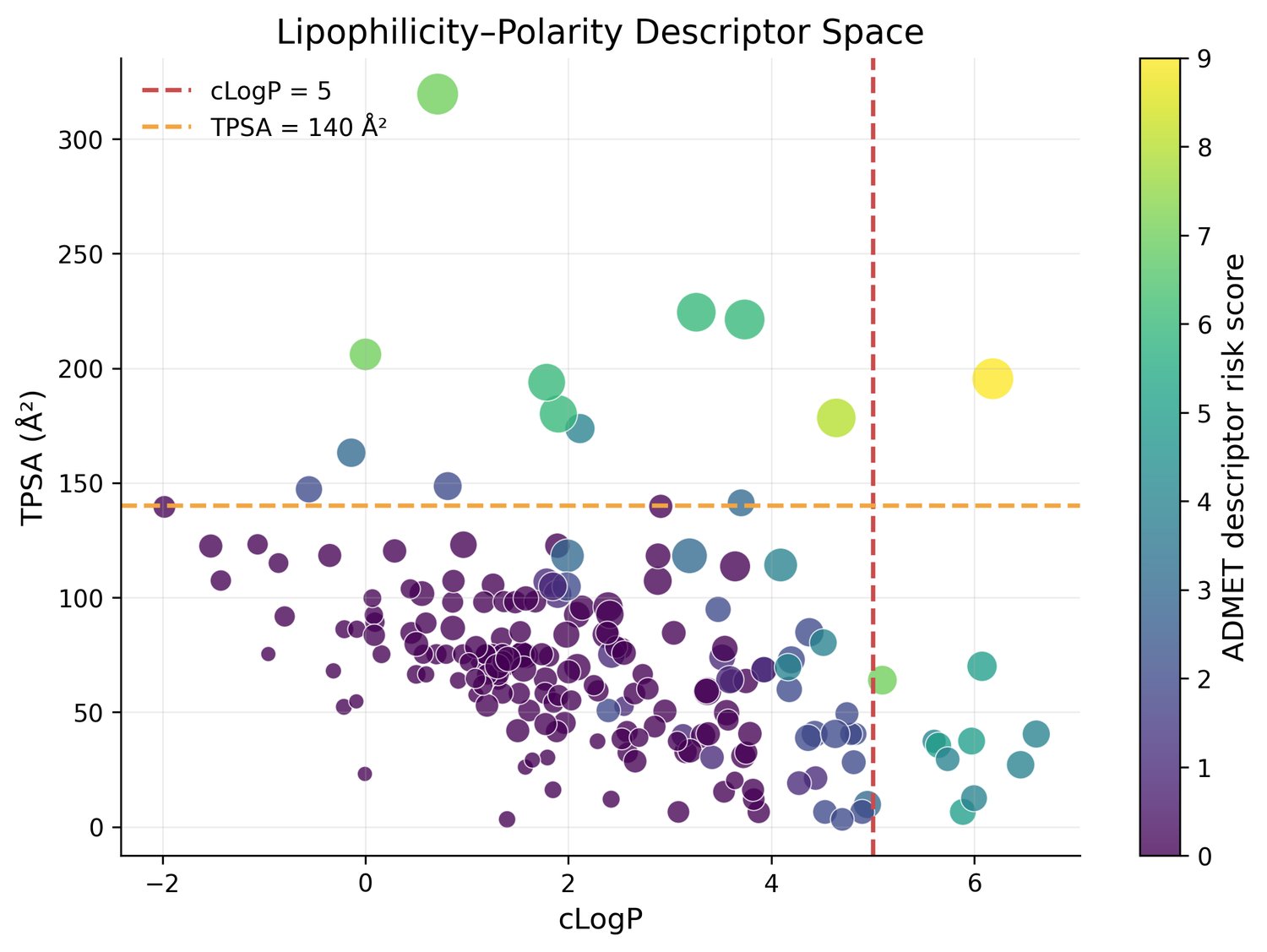
- cLogP versus TPSA maps with the cLogP 5 and TPSA 140 Ų limits drawn
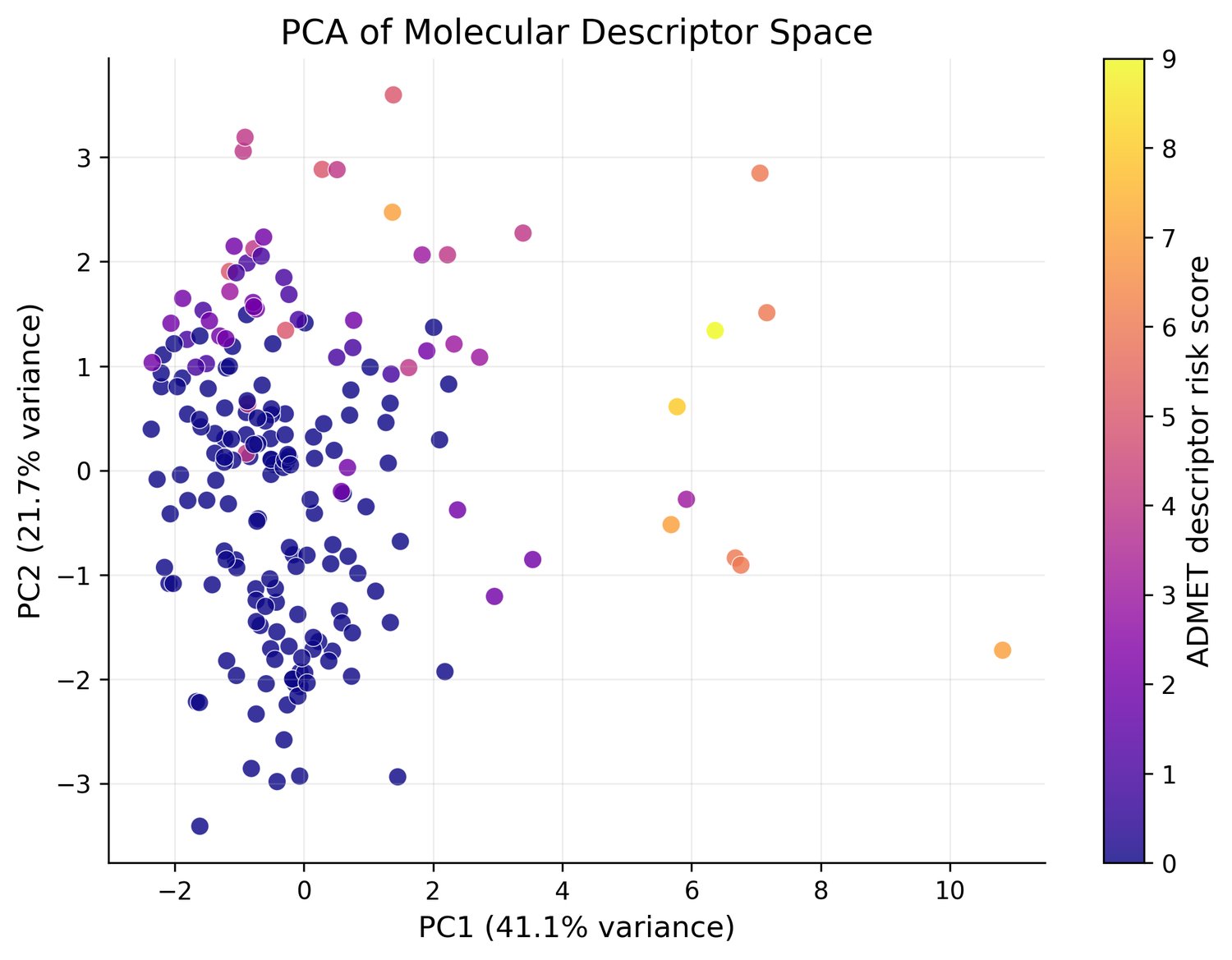
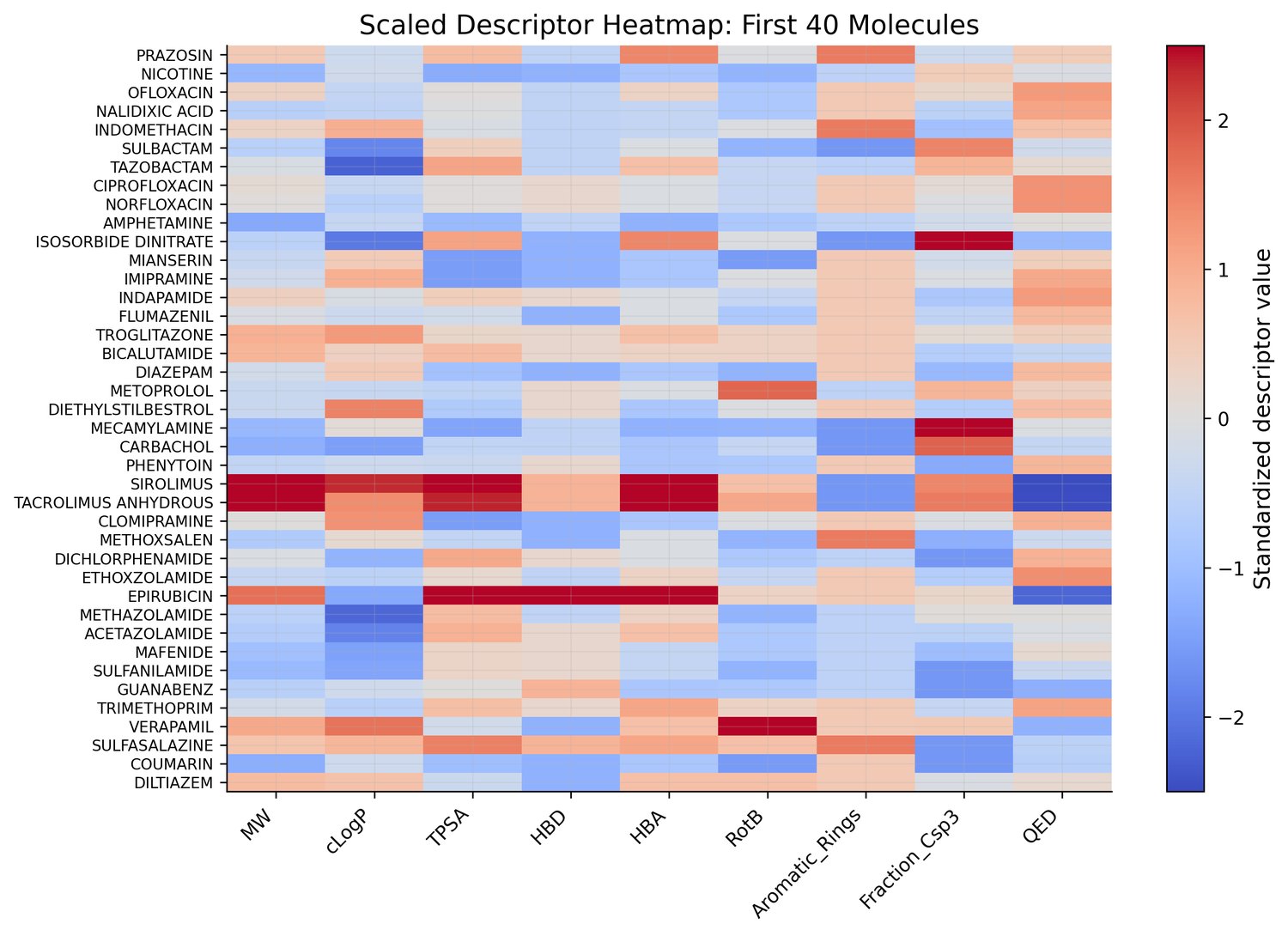
- Scaled descriptor heatmaps and PCA of chemical space
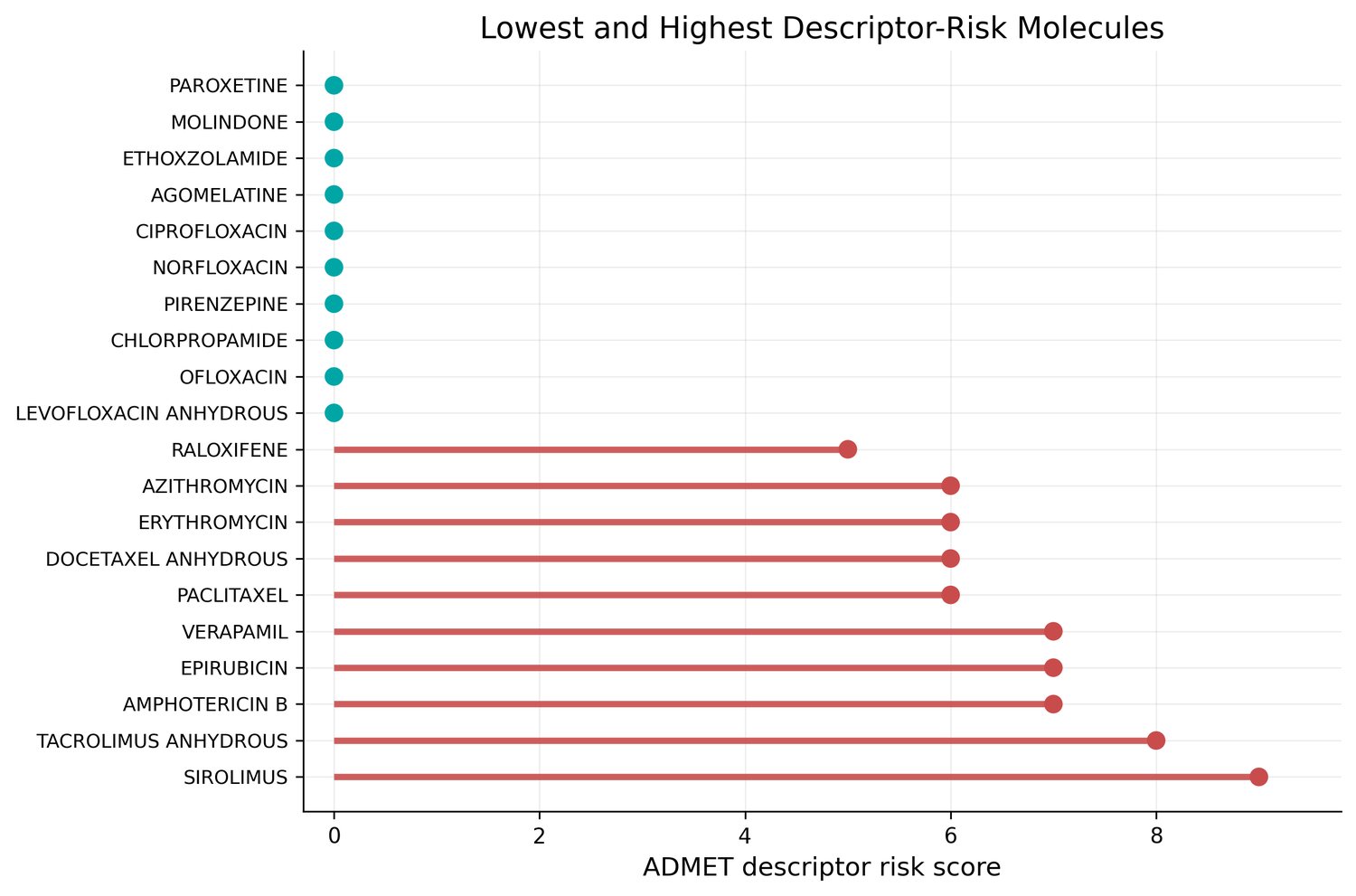
- A transparent risk score, ranked, with the dominant risk named per molecule
- Export: Excel workbook, markdown summary and a ZIP of the session
- Day 3 · Thu 26 Nov
End-to-end campaign: ML screening, Meeko prep and AutoDock Vina docking
The project question: can a machine-learning model and a descriptor-space similarity search find molecules with acceptable ADMET profiles and predicted binding comparable to a known EGFR inhibitor?
Train
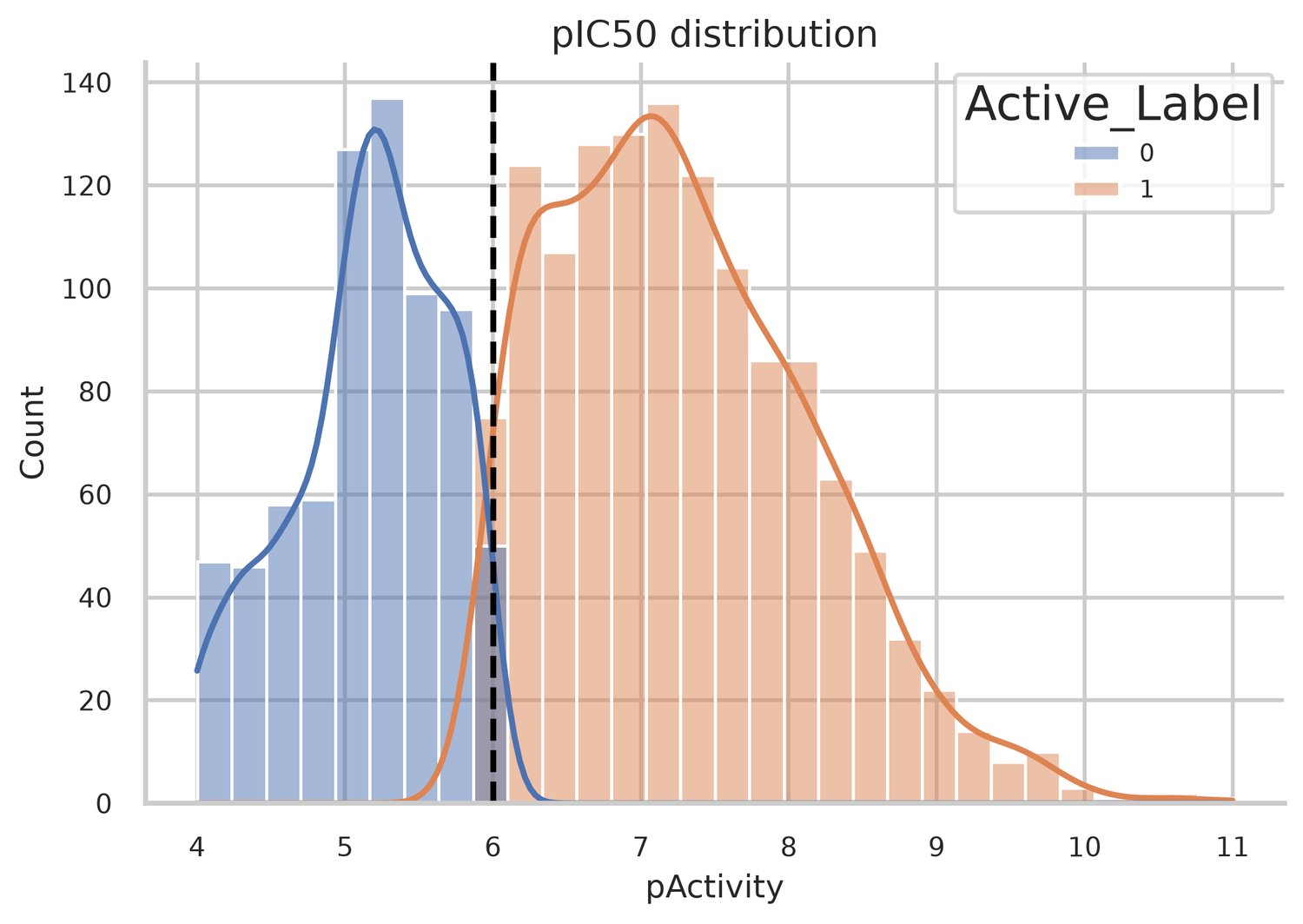
- EGFR IC50 data from ChEMBL (CHEMBL203) converted to pIC50 and activity labels
- Five classifiers on descriptors plus Morgan fingerprints
- ROC-AUC, F1, precision, recall and the confusion matrix — picking the metric before the model
Search and triage
- Choosing a seed: the most potent molecule in the training set
- FAISS nearest-neighbour search in scaled descriptor space across 20,000 ZINC molecules
- ML activity probability and ADMET risk for every hit, before any docking is attempted
Dock and decide
- Receptor from PDB 1M17; ligand preparation with Meeko and PDBQT conversion
- AutoDock Vina runs inside the GUI and 3D pose comparison against the seed
- An integrated ranking combining ML probability, similarity, docking score and ADMET risk
- Where docking misleads: our erlotinib re-docking test, discussed openly
Results from a real run
What you will produce
Every figure below came from running the Day 2 and Day 3 workshop material end to end on public data: 200 approved drugs from ChEMBL, 4,000 EGFR IC50 records from ChEMBL (CHEMBL203), 20,000 molecules from ZINC250k and the EGFR crystal structure PDB 1M17. Nothing here is illustrative.
The class data is frozen and hash-verified, and the notebooks were re-run from it with identical results, so your own numbers match these when you run the same material.
Descriptors are distributions, not thresholds
Before anything is automated, you read molecules as property profiles. Approved drugs sit on both sides of the Lipinski lines, which is exactly why the rules are warning lights rather than gates.
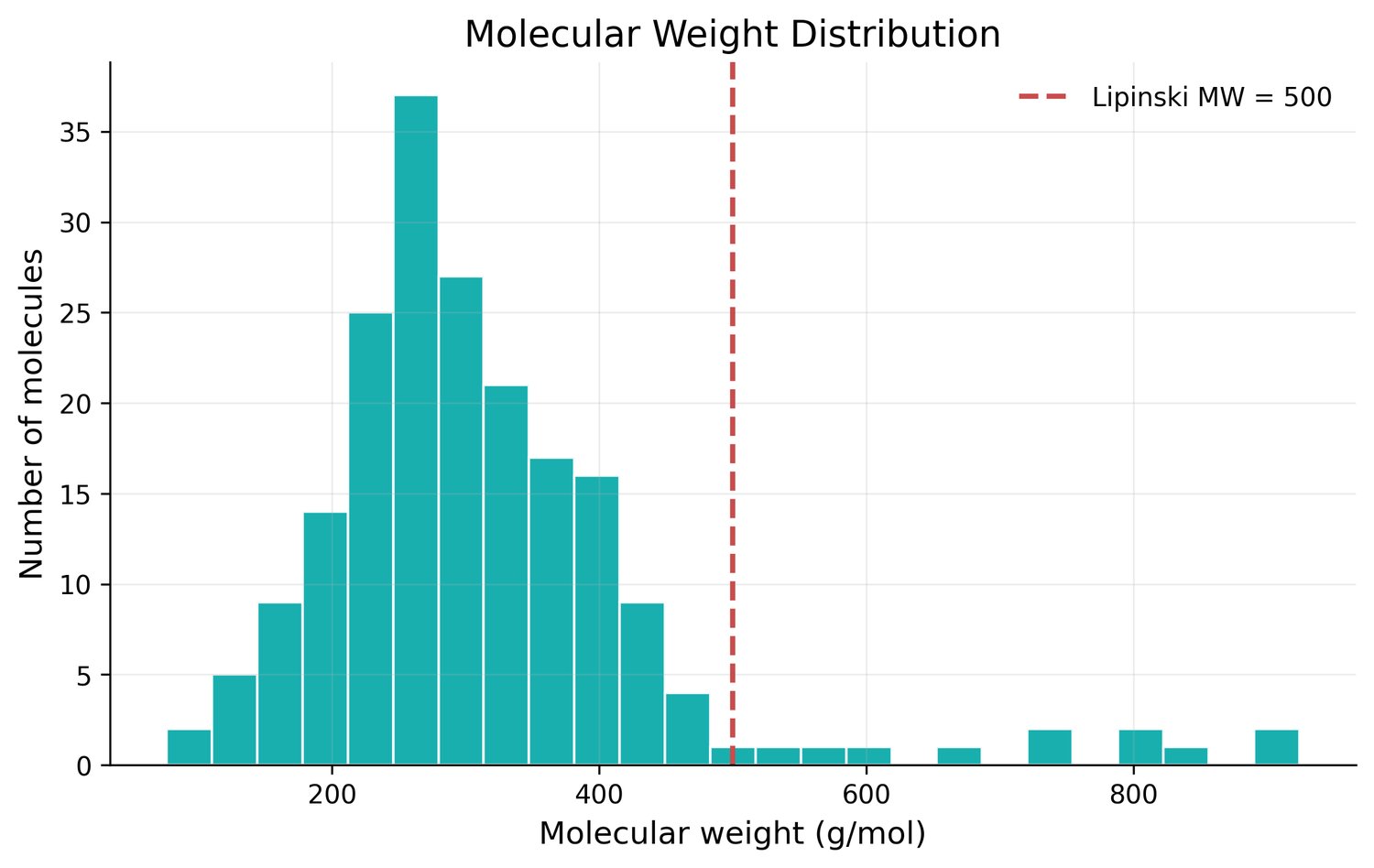
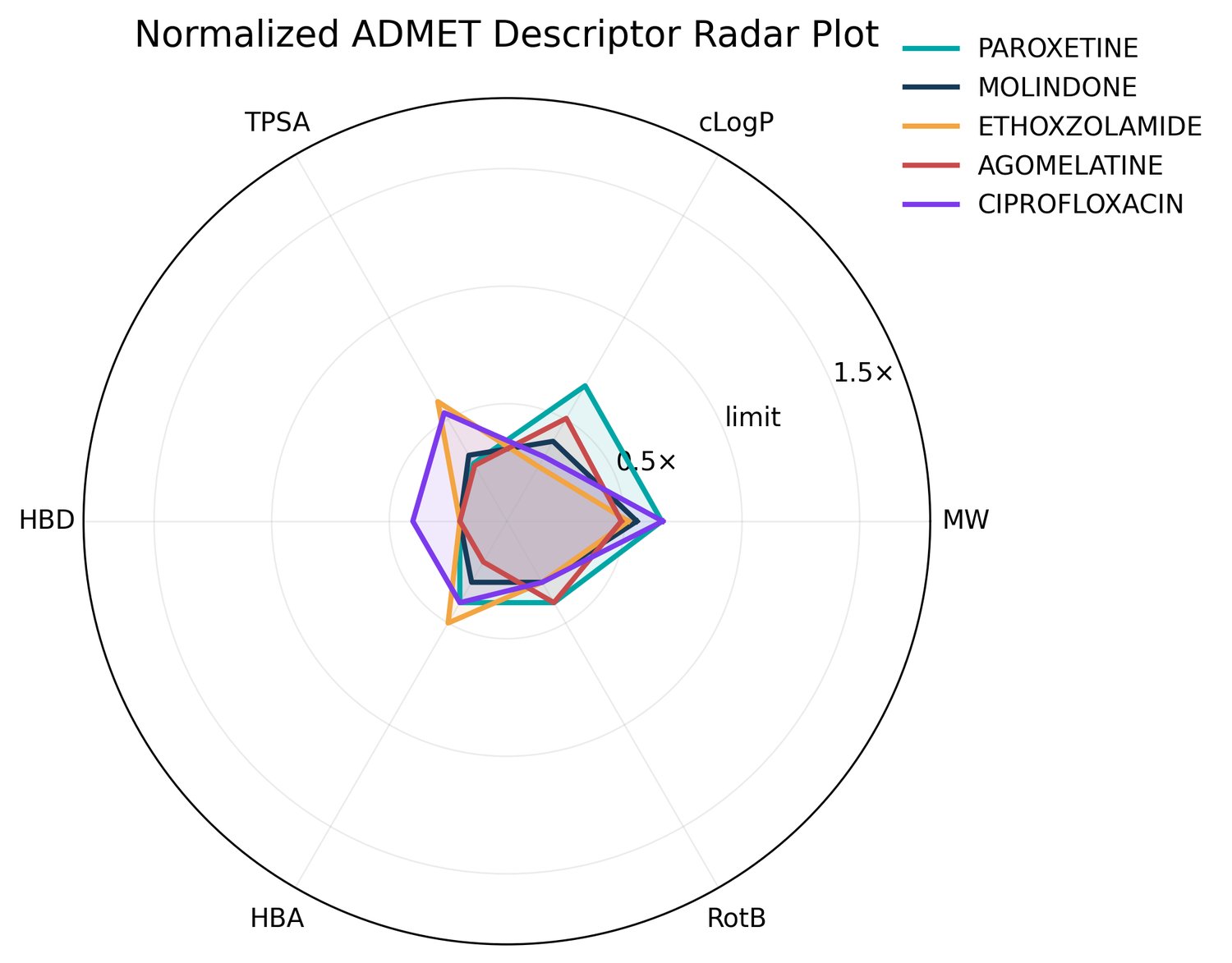
200 ChEMBL approved drugs in, 198 profiled and ranked
After curation, 198 unique structures were profiled: 153 low descriptor risk, 23 moderate and 22 high. The high-risk group is dominated by large, polar natural products such as sirolimus, tacrolimus and amphotericin B — exactly the molecules Lipinski and Veber were built to flag.
An EGFR activity model from 2,022 molecules
4,000 EGFR IC50 records reduced to 2,022 unique molecules — 1,303 active at pIC50 ≥ 6.0 and 719 weak or inactive. Five classifiers were tested on 405 held-out molecules. XGBoost gave the best ROC-AUC at 0.935 (accuracy 0.877, F1 0.906); all five scored between 0.91 and 0.94.
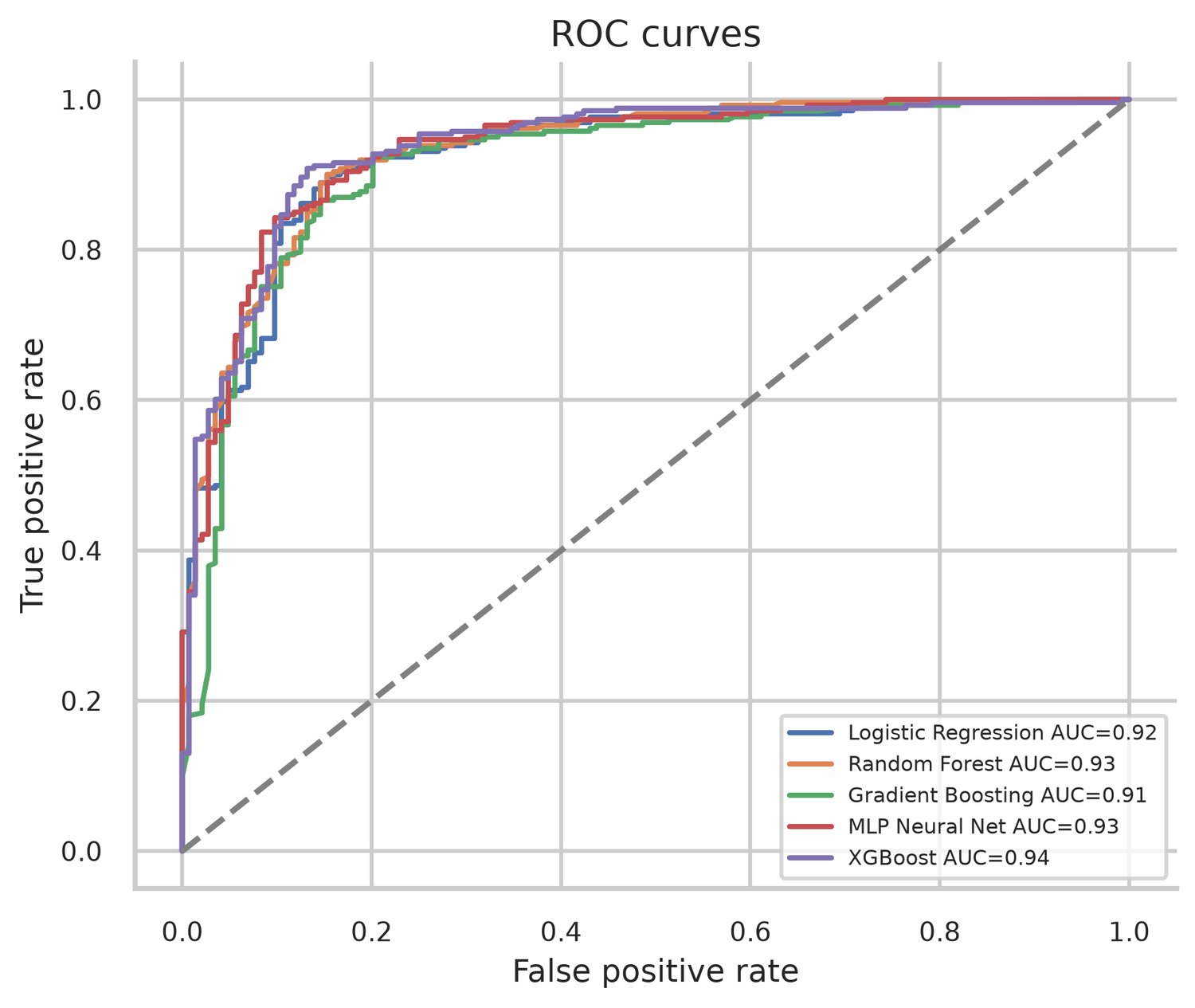
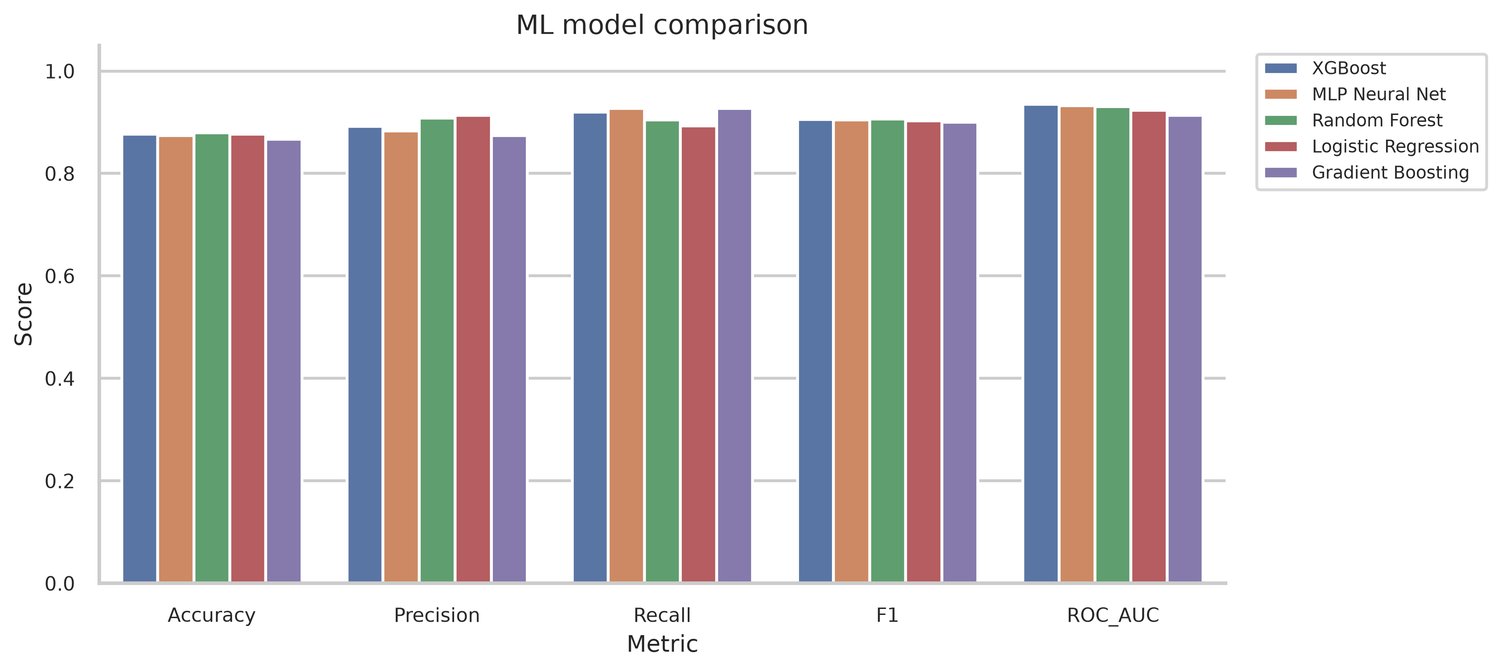
From one seed inhibitor to ten FAISS neighbours
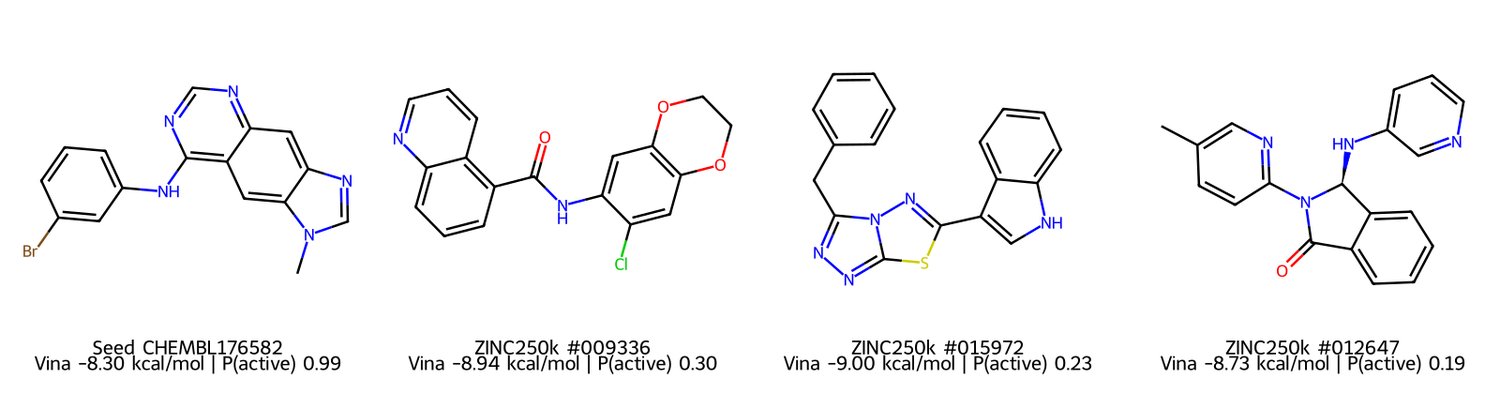
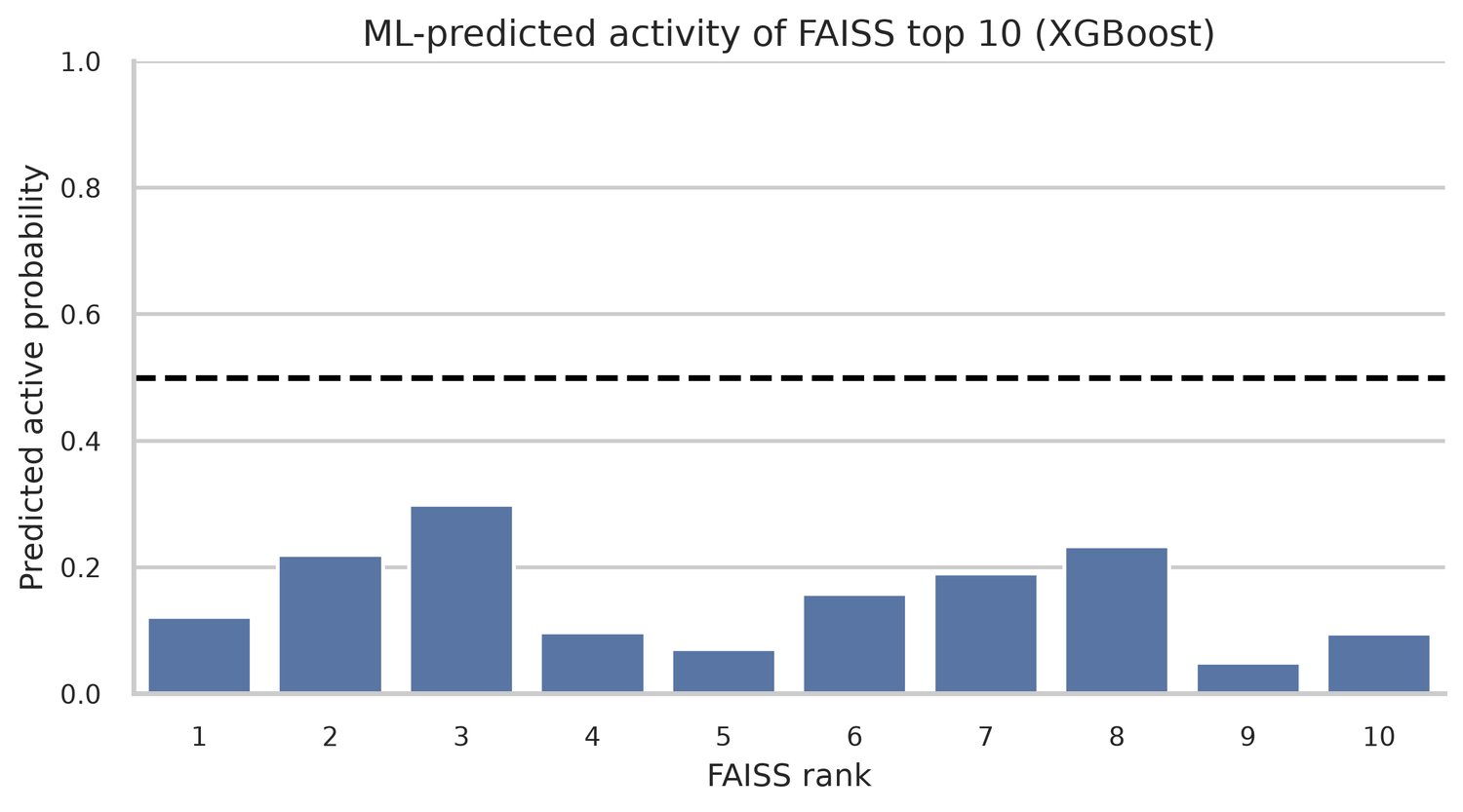
The most potent molecule in the set, CHEMBL176582 at pIC50 11.0, became the seed. FAISS retrieved its ten nearest neighbours from 20,000 ZINC molecules at cosine similarity 0.937 to 0.957. The model then scored those hits — and disagreed with the similarity search.
Docked into the EGFR ATP site, then ranked
All eleven ligands were prepared with Meeko and docked with AutoDock Vina. Scores ran from −7.3 to −9.0 kcal/mol against the seed's −8.30, and six of the ten hits beat the seed on score alone — which is why docking score alone is not a decision. ML probability (35 %), FAISS similarity (25 %), normalised docking score (25 %) minus ADMET risk (15 %) produce the final ranking, with ZINC250k #009336 the best-ranked hit at Vina −8.94.
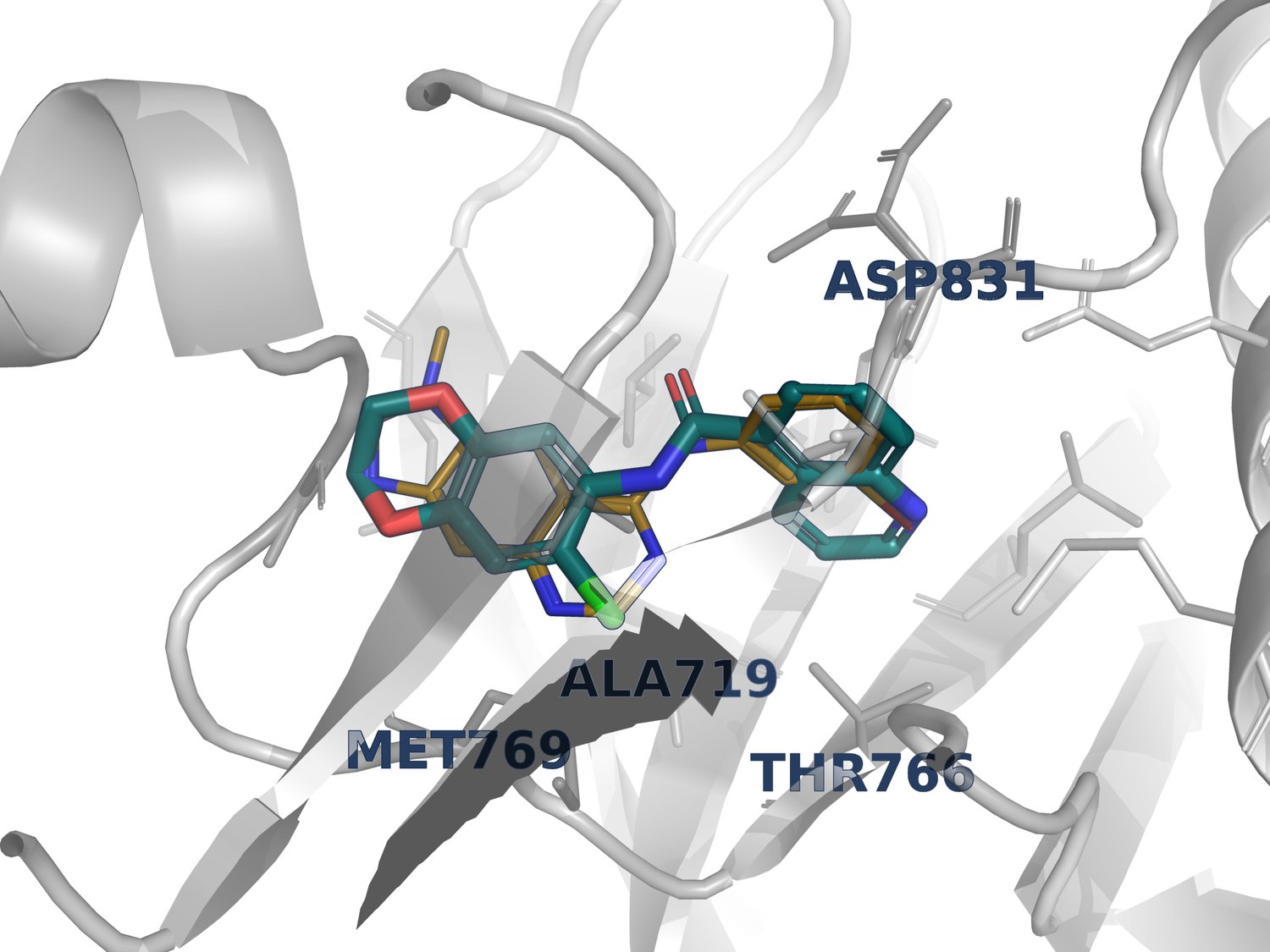
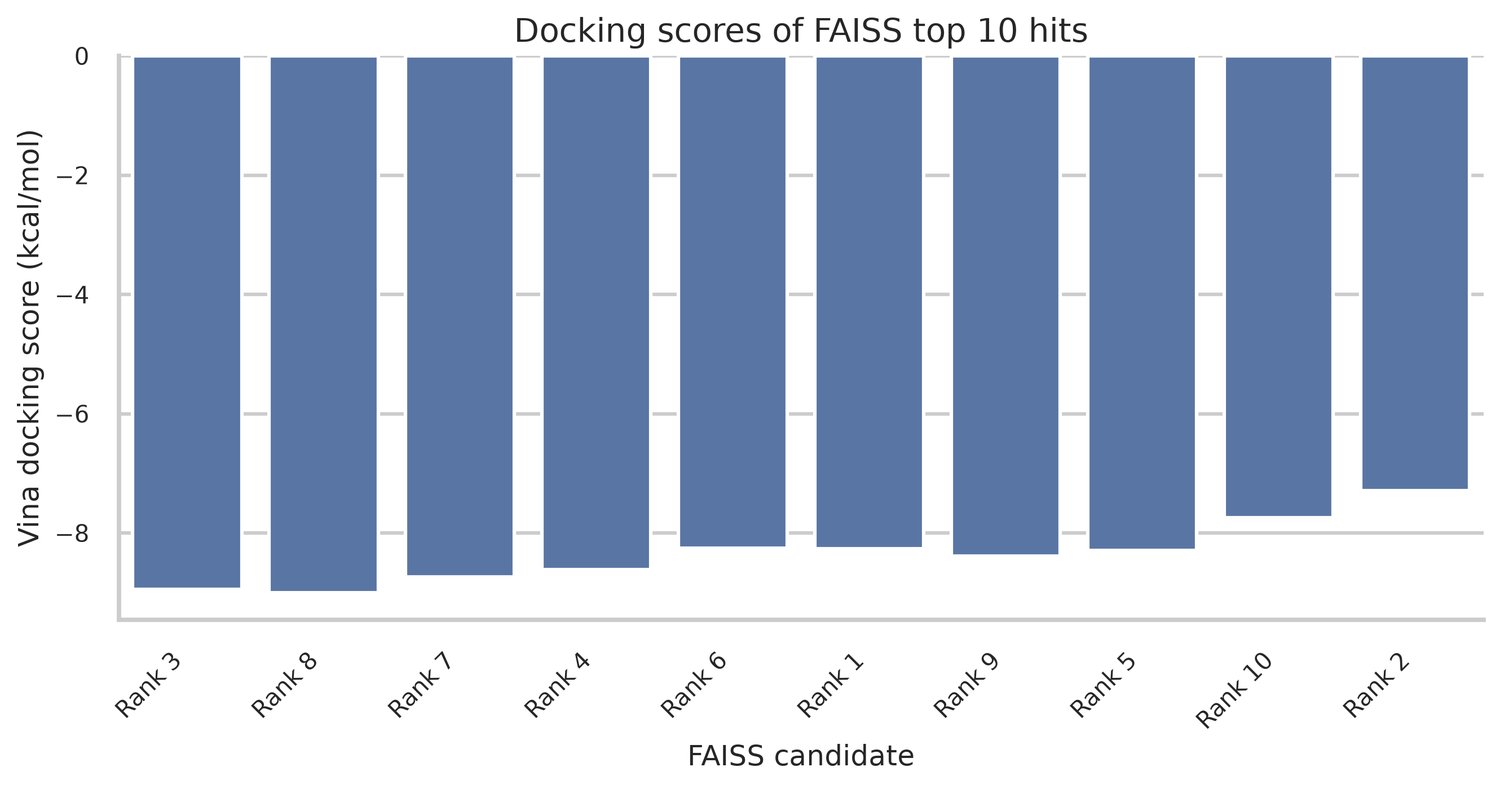
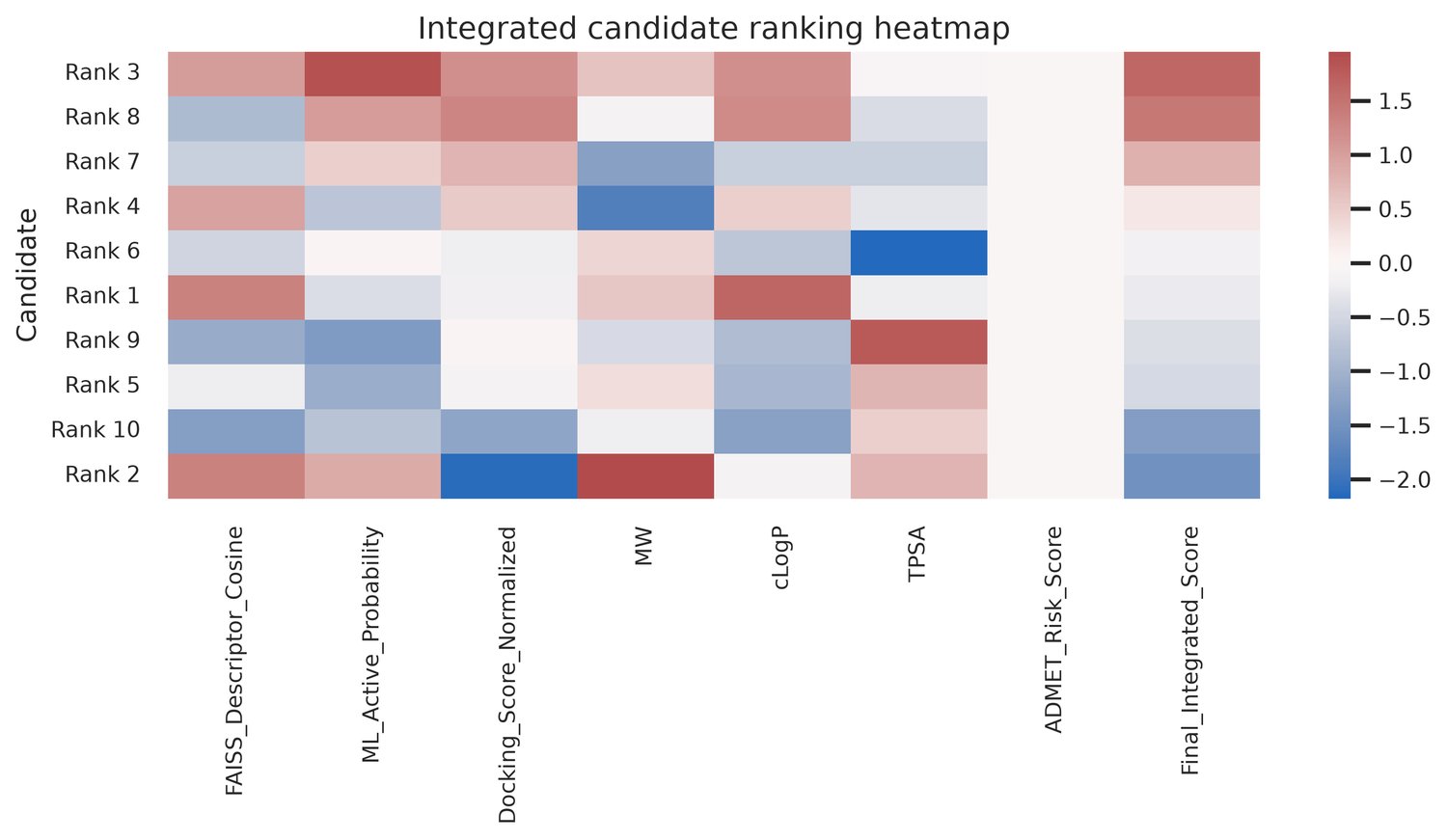
The ten FAISS hits are physicochemically close to the seed, yet the model gives them activity probabilities of 0.05 to 0.30 while their docking scores match or beat it. Each method sees a different part of the problem, which is why Day 3 combines them instead of trusting any single score. We also re-docked erlotinib into 1M17: in three of five runs Vina found a near-native pose at 1.2 to 1.7 Å RMSD, but never ranked it first. We discuss that openly in class — docking scores are a ranking aid, not proof of a binding mode.
What you receive
- The standalone ADMET & Docking Workbench for Windows and Linux, yours to keep and use offline
- Ready-to-run annotated Google Colab notebooks for all three days
- The frozen, hash-verified class data behind every figure on this page
- The 44-page Practical Code Companion and the Day 1 theory tutorial as PDFs
- Recordings of all three live sessions
- Verified certificate of completion
- Access to the participants' WhatsApp forum for continued doubt clearing
Who it is for
- B.Sc., B.Pharm, M.Sc., M.Pharm and Ph.D. students and researchers in pharmaceutical sciences, chemistry, biotechnology and bioinformatics
- Early-career researchers starting computer-aided drug design or virtual screening projects
- Medicinal chemists who want a fast, interpretable computational triage of their own compound series
- Faculty looking for a ready, reproducible ADMET and ML practical for their own courses
Register
Fees & registration
₹1,200 / $20
Rupees for participants in India, US dollars for international participants.
1. Fill in the registration form
Open registration form2. Pay the registration fee
After paying, email the transaction screenshot to support@discoveryboulevard.com.
Good to know
- • Sessions are live at 8:30 – 10:00 PM IST on 24, 25 and 26 November 2026; recordings are shared with every registered participant.
- • The Workbench executables are built for Windows and Linux. macOS users run the same workflow through the Google Colab notebooks.
- • Bring a laptop with an up-to-date Chrome or Edge browser and about 1 GB of free disk space for the software and data pack.
- • Basic chemistry and biology are enough; Python experience helps but is not required.
- • The descriptor-based ADMET score taught here is an interpretable triage score built from Lipinski, Veber and six physicochemical proxy flags, not a validated endpoint-specific prediction engine.
- • Seats are limited so that every participant receives hands-on support. The registration fee is non-refundable and non-transferable.